He has improved since he had that bad acne in the 80s, I’ll give him that. And he doesn’t really attempt things he can’t do, a mark of a wise man.
Re Astronomy, he’s always sounded a bit as if BÖC’s Eric Bloom couldn’t sing.
I love Eric Bloom.
The era of poor singers, from the late 80’s on. if we can call them that. And it has continued going down the gurgler in so many ways. Hence pitch correction and auto tune. Ho hum, such is life, unfortunately. Cheers.
To be fair: No one bought Metallica albums or went to their gigs for the vocals.
Whiskey in the Jar by 'tallica is a contender for worst cover version ever, along with Knocking on Heaven’s Door by GnR and our very own When A Blindman Cries, again by Metallica. My humble opinion.
Axl Rose always sounded to me like Janis Joplin - minus her C&W warmth in her voice which makes all the difference.
When Metallica do Thin Lizzy, BÖC or Bob Seger, it’s always a bit like a mechanical hippo doing ballet. I actually think that WABMC is one of their better covers because they gave their version something somber and austere which somehow worked.
Astronomy has some extraterrestrial Touch,Bloom’s voice haunts me to this day, i was hooked from the very first moment i heard the Some Enchanted Evening album as a 13 year old boy…and that guitar solo…simple and thrilling
Metallica didn’t do a very good job with When a Blind Man Cries, they could have done better.
but perhaps that is impossible for anyone other than Purple.
I think Guns’ version of Knockin’ is a great cover - masterfully played with great feeling- that also breathed new life into Dylan’s career and brought him back into the spotlight in the 90s.
I hate to disappoint you and Uwe, but Metallica’s covers of “Astronomy” and “Whiskey” sound more adventurous than the originals, and I also find James’s delivery superior to those of Bloom and Lynott.
It’s not sacrilege to say that a band recorded a cover that’s better than the original, don’t you think?
I love BoC, but I don’t really get all that magic in Astronomy compared to the Metallica cover.
In fact, the original version strikes me as cold and overly stiff, distant from the listener; it is one of the few songs I could do without the piano on.
(Obviously, “Whiskey” isn’t a Lizzy song, but rather an American standard played by dozens of bands over the course of a century or more.)
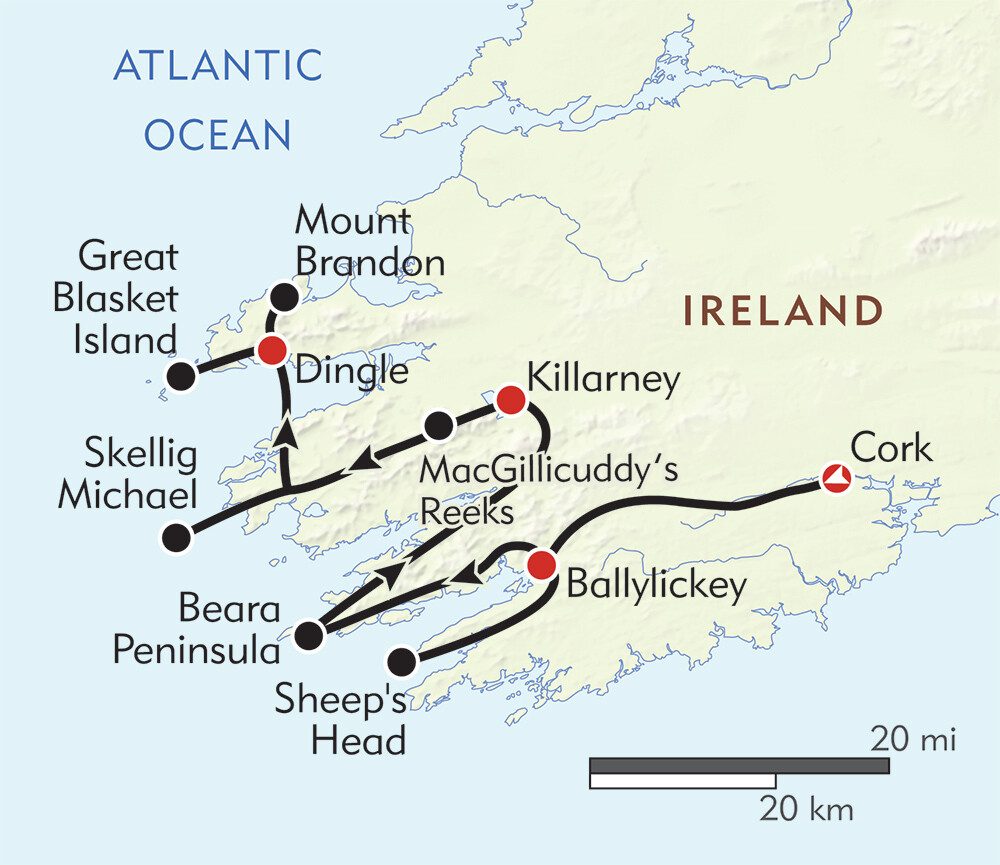
I now fear for Flavio’s life, I really do. Calling Whiskey In The Jar an American standard with its reference to Cork and Kerry Mountains
 to punish him in his sleep tonight.

Next week, Flavio will explain to us how 0 Sole Mio is an American C&W song, you just wait!
Or is it not?
Metallica fans, tsk, tsk, tsk, allora, who will save us from them?
I apologize to all Irish people for my mistake! 
I knew that perfectly well, but I was rash to write it!
internet doesn’t forgive these imprudence!
Among other things, it was one of the many songs I worked on when I took a music therapy course in the early 2000s.
I imagine my teacher from back then must have had her ears burning today!
Indulgéntiam, absolutiónem et remissiónem peccatórum nostrórum tríbuat nobis omnípotens et miséricors Dóminus. Amen.
Should you be unfamiliar with this more archaic type of Italian, Flavius, I’m sure Tilly Maximus can help you with a working translation! 
Are you the reincarnation of the Count?
Fortunately, this Latin blessing is easily understood by an Italian.
What’s more, I toured all of Ireland by car, even visiting Skellig Michael, well before it became famous thanks to Star Wars.
Frankly, I was hoping for a bit more credit from you for being the first to post a Mario Lanza vid at THS!
What else do I need to do?!
I appreciate the Mario Lanza video on the pages of this cultural-musical forum with all my heart!
However, I have to tell you that in Italy, the most famous versions are those by the legendary tenor Enrico Caruso:
https://youtu.be/u1QJwHWvgP8?si=R6ojucURh7qDk6oe
and of the “little king” Claudio Villa:
https://youtu.be/D_h69nCDzJs?si=TsSBGpNqL8MGwMjX
And then there was the great Carosone, playing it in a swing-jazz style on the piano!
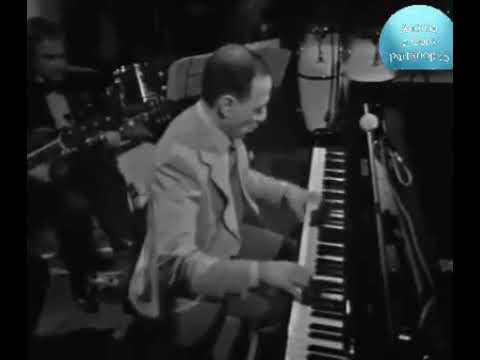
Now we’re talking, allora! What took you so long? All three vids are great, the two bel cantos and the dexterous swing wizard!
Tilly’s Latin held me back.
To think I hadn’t realized you were referring to Tilly from the other discussion, but rather to the German Count Tilly in the context of Latin, effectively proclaiming yourself to be Count Tilly!
I need to learn not to visit the forum when I’m tired before going to bed!
Never mind, I’ll admit it now: And I thought Mario Lanza was - like Caruso - Italian! Unforfuckingmaledettogivable.  Only his parents were, the guy was a Yank and born as Alfredo Arnold Cocozza in Philadelphia.
To my defense, he did play Caruso in a Hollywood film once!
Mario Lanza possessed an excellent operatic voice, yet in Italy he is not held in the same regard as other singers, except for the fact that he achieved success through a film and recording career overseas.
He had brought operatic singing to the American public, and that was no small feat.
Even the Three Tenors -Pavarotti, Domingo, and Carreras- hold him in high regard, though specifically for his having become a mainstream, popular icon.
In Italy, the benchmark tenors were Enrico Caruso and Beniamino Gigli.
In the seminal texts on vocal analysis and laryngophony by the legendary Dr. Franco Fussi e Dr. Alfred Tomatis (whose works I own in my collection of books on vocal analysis and singing), and other pioneers of vocal science, two names are invariably cited: Caruso and Gigli.
I’m not up to date on this, but even when Pavarotti was alive -despite having better technique than the others- he wasn’t regarded in the same light as the other two tenors from the turn of the century.
Caruso was the one who, through technique and an understanding of his own vocal apparatus, overcame his limitations, achieving a level of control over the mechanisms and modifications of the vocal tract unlike anyone before him.
He was a heavy tenor, likely a baritone originally, who, thanks to extraordinary work on himself, extended his vocal range.
Gigli was a lighter, highly expressive tenor.
Clearly, from a technical standpoint, his larynx was perfectly trained and conditioned by thousands of hours of study, but he had the advantage (like Big Ian) of possessing a natural contralto voice in his youth,cand for a male singer, that is an absolute stroke of luck!
So, Caruso’s willpower, altering his vocal anatomy versus Gigli’s natural gift, which was, of course, perfected through years of study.
Big Luciano combined the best of both worlds: a lyric tenor ,at times almost light in quality, with a bright timbre and penetrating high notes, despite employing the technique of “darkening and closing” the vowels (perhaps because his voice was naturally too bright).
In reality, he technically surpassed the other two, and vocally, too, he was the most complete tenor in the world for 30 years. A robot.
But in classical music and opera, there are precursors just as there were in rock music, aren’t there?
By now, Pavarotti has become a trailblazer, and he will likely be celebrated in conservatories around the world just as much as the others.
When I recorded i Pagliacci with Roberto Alagna at the Teatro Filarmonico in Verona about twenty years ago, I was truly impressed by his voice and technique, and I thought he was number one.
A few years later, I was appalled by the gallery audience at La Scala, who booed him during the premiere of Aida, to the point that Alagna walked out on the production and was replaced by the understudy!
There are many theater season subscribers who have never sung a note and have no idea of the effort singers put in, and I find it disgusting that they feel entitled to ruin a singer’s career.
Not just any singer who appears on a talent show without knowing what notes they are singing, but a singer who, having studied voice, solfège, and composition since childhood, has lived a life full of sacrifices.
I was treated to all that opera music in my early twenties by a friend who collected shelac and vinyl by all the italian tenors, i could add "Pipo"Di Stefano to those legends, i tried hard to get the magic of opera, even visited the viennese opera house a dozen times…but i never got hooked to that kind of music