While looking through some old photos recently, I was reminded of a rather special moment from the Stranger In Us All era that many newer fans may never have seen.
On 26 July 1996, before Rainbow’s concert at the Nibelungenhalle in Passau, Germany, Horst Langer, founder of ENGL Amplification, personally visited Ritchie backstage to present him with the very first ENGL Ritchie Blackmore Signature 100 amplifier.
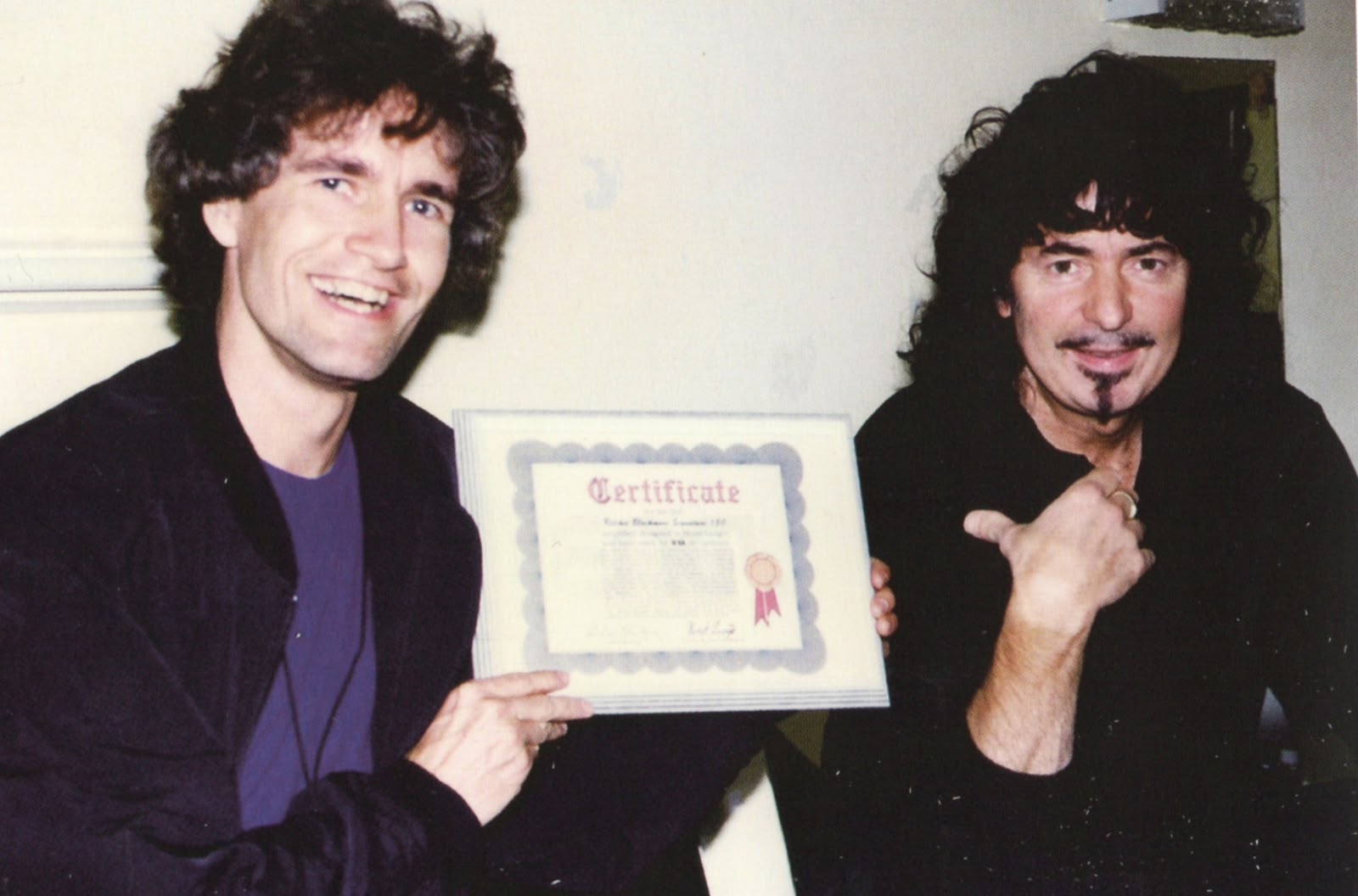
To me, these pictures are much more than simple backstage snapshots—they capture the beginning of a partnership that would shape Ritchie’s electric guitar sound for many years to come.
At the time, Rainbow were in the middle of the excellent Stranger In Us All European tour. Interestingly, only two days earlier, after Rainbow’s show in Vienna, Ritchie had recorded his now rather overlooked guest solo on Pat Boone’s big-band version of “Smoke on the Water.” It was certainly an eventful week in his career.
One thing I’ve always found interesting is that Ritchie never claimed to have “designed” the amplifier himself. In later interviews he explained that ENGL simply listened to his playing and developed the amplifier around the sound they heard:
“I didn’t have a lot of input in the design… they came to hear my sound and designed the amplifier around that.”
That sounds very much like Ritchie. Rather than telling engineers how to build an amplifier, he simply plugged in, played, and let ENGL do what they did best.
He also had unusually high praise for the company:
“They make great amplifiers… for loud musicians I think they’re the best. Much better than Marshalls.”
Considering that his name had been associated with Marshall stacks since the late 1960s, that’s quite a remarkable statement.
In another interview he explained what impressed him most:
“The ENGLs sound great at any volume. My Marshalls only seemed to work best when they were flat-out.”
That probably explains a lot about the Stranger In Us All sound.
For anyone interested, the original Blackmore Signature 100 featured:
- 100-watt all-tube design
- 4 × EL34 power tubes
- 4 × ECC83 / 12AX7 preamp tubes
- Clean and Lead channels
- Built-in Contour (mid-boost) circuit to help recreate Ritchie’s famous lead sound
- Fast response and excellent note definition
Here’s a little twist that many fans may not know:
Although the Signature 100 was officially presented to Ritchie in Passau and soon became closely associated with him, he never actually used it live during the Rainbow years.
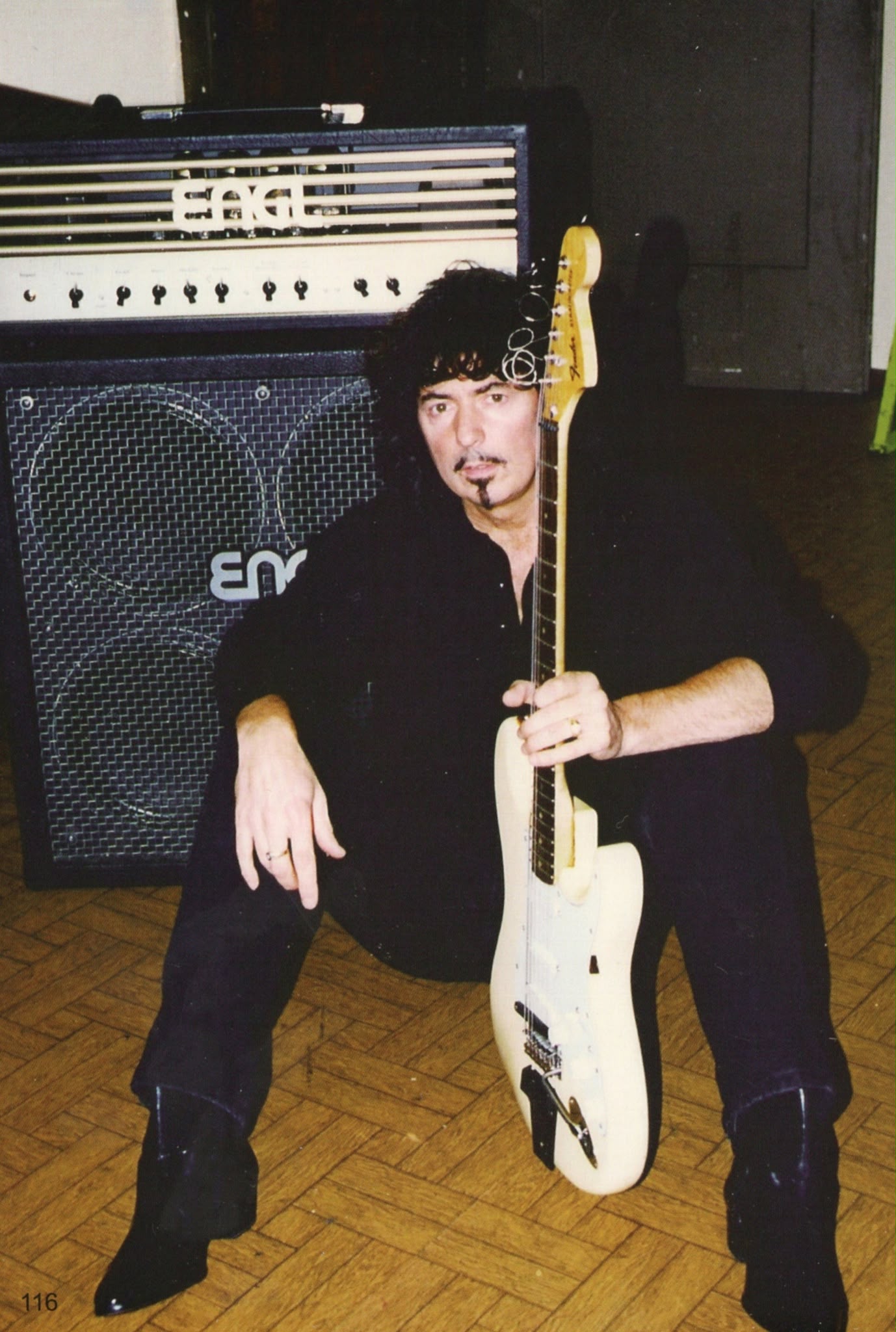
Throughout the 1996 Stranger In Us All tour, and even on Rainbow’s 1997 US tour, Ritchie continued to play through the ENGL Sovereign 100 combo. In 1995 it was an ENGL Savage by the way.
The Signature head often appeared on stage as part of the backline and became visually linked with Ritchie, but according to the available information, it wasn’t the amplifier producing his live sound.
When Blackmore’s Night started in late 1997, he changed permanently to the ENGL Sovereign 50, which remained his main amplifier for many years afterwards.
I’ve always found that rather curious.
One would naturally expect the artist to immediately switch to his own signature model, but Ritchie seemed perfectly happy sticking with the Sovereign that was already delivering the sound he wanted. In typical Blackmore fashion, practicality appears to have mattered more than marketing.
One thing that’s often overlooked is that ENGL didn’t change Ritchie’s playing—it simply complemented it.
His phrasing, note choice, vibrato and unmistakable personality were still entirely his own.
What the ENGL amplifiers added was a tighter, more focused platform for his mid-90s sound.
One important detail is that the ENGL was only part of the equation.
Throughout the Stranger In Us All era, Ritchie continued to run his guitar through the preamp section of his beloved Aiwa TP-1011 reel-to-reel tape recorder before feeding the signal into the amplifier. That little Aiwa preamp remained a key ingredient of his tone, adding the characteristic warmth, compression and midrange bite that had already become part of his sound years earlier.
In other words, the ENGL didn’t replace the famous Aiwa—it complemented it. Here you can see it on stage (Esbjerg, Denmark; 31st May 1997)
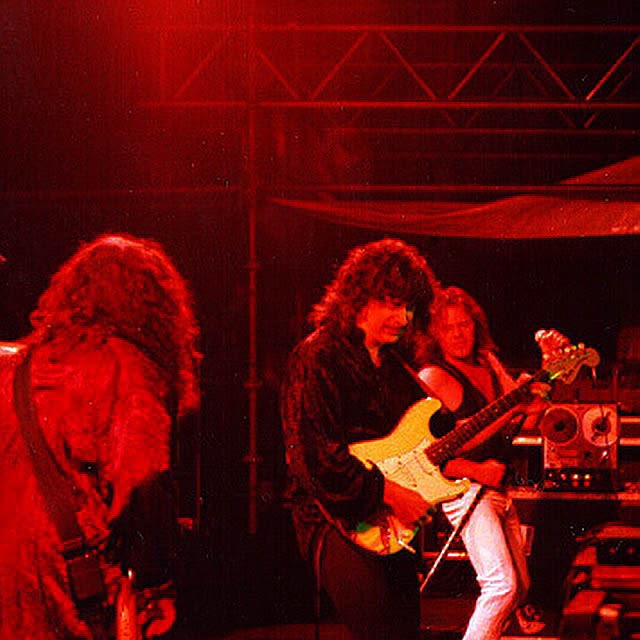
To my ears, you can hear that character throughout the Stranger In Us All era on songs like Wolf to the Moon, Black Masquerade, Ariel, Hall of the Mountain King, and especially in many of his live improvisations from 1995–97.
Today, the Blackmore Signature 100 is considered one of ENGL’s classic amplifiers, but these photographs document where that story really began.
I especially like the first photo, with Horst and Ritchie shaking hands in front of the amp. It almost feels like the official start of what became one of the most successful artist-manufacturer collaborations in modern guitar amplification.
I thought some of you might enjoy this little piece of Rainbow history.
Photo credit (as far as I know): Antonio Scettri. Many thanks for capturing and preserving these wonderful backstage moments from Passau, 26 July 1996